The Plane
Unreal Engine
PC · 2024 · Symbolic Scene
The Plane
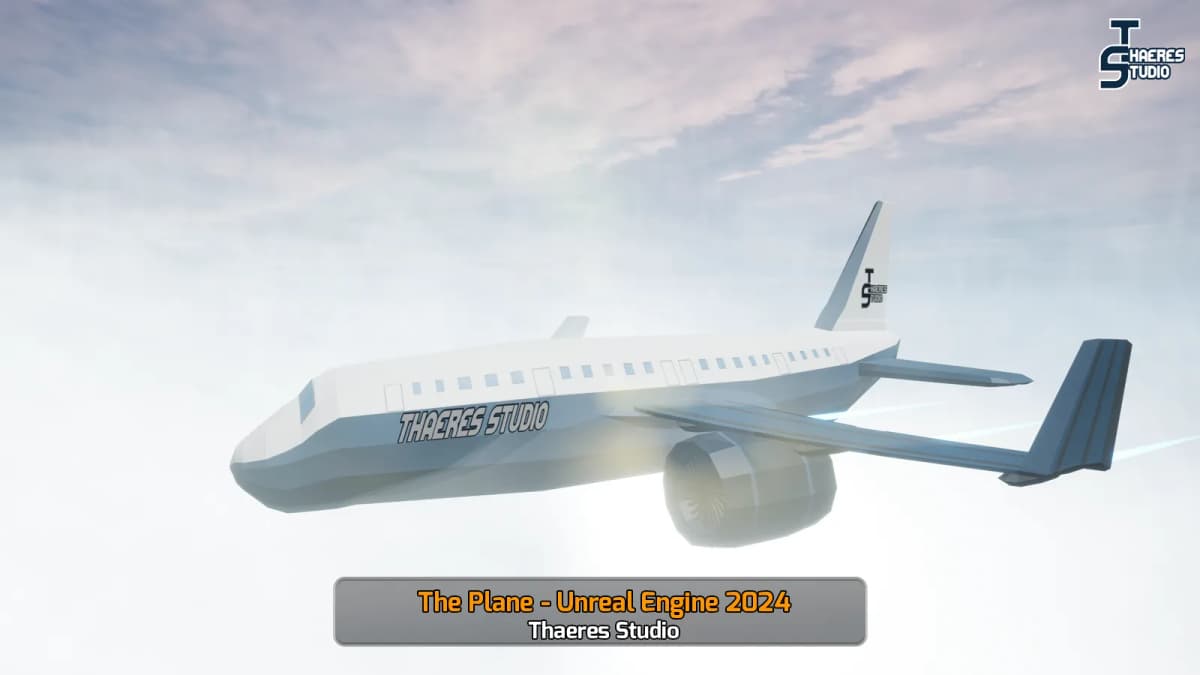
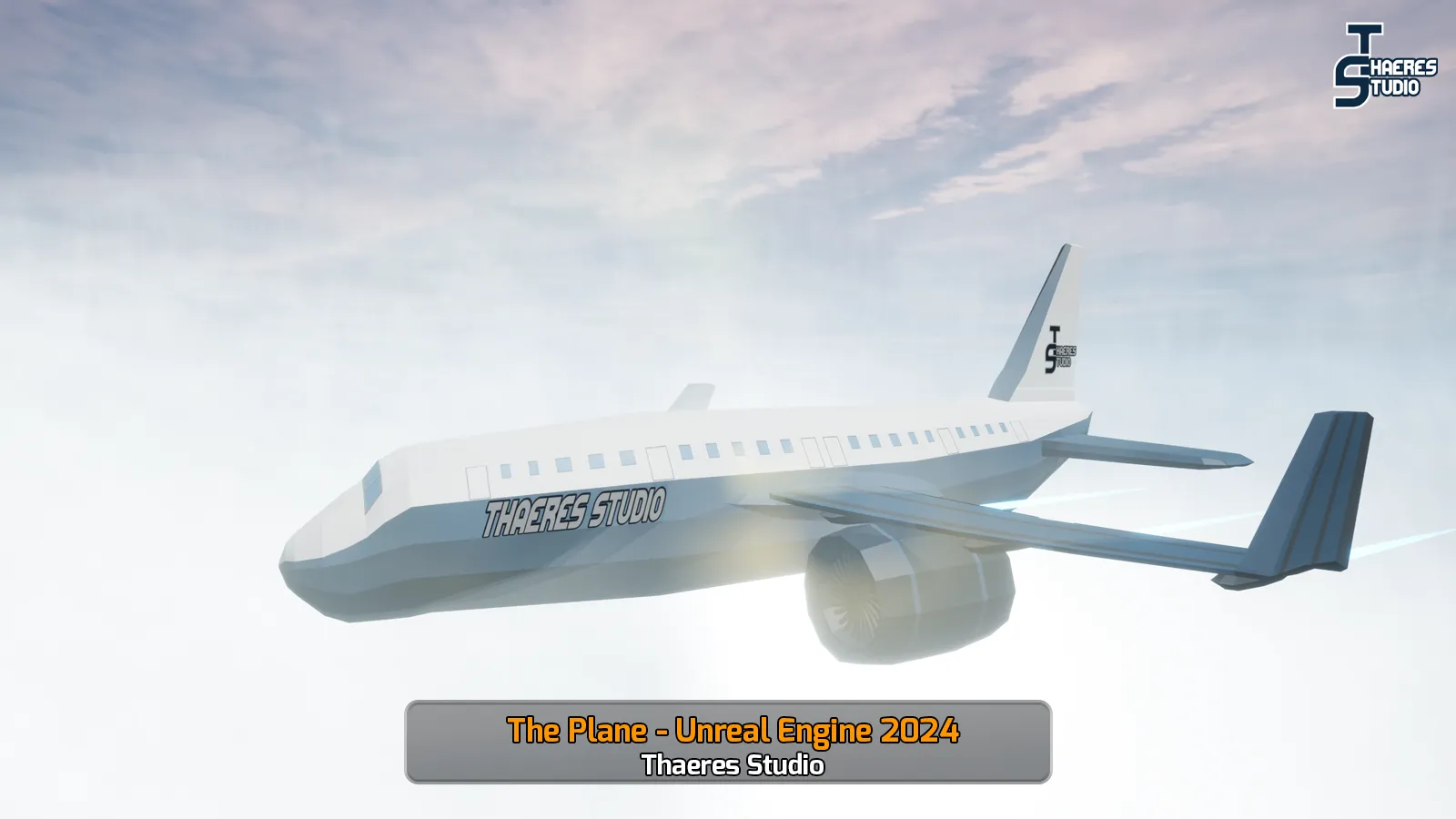
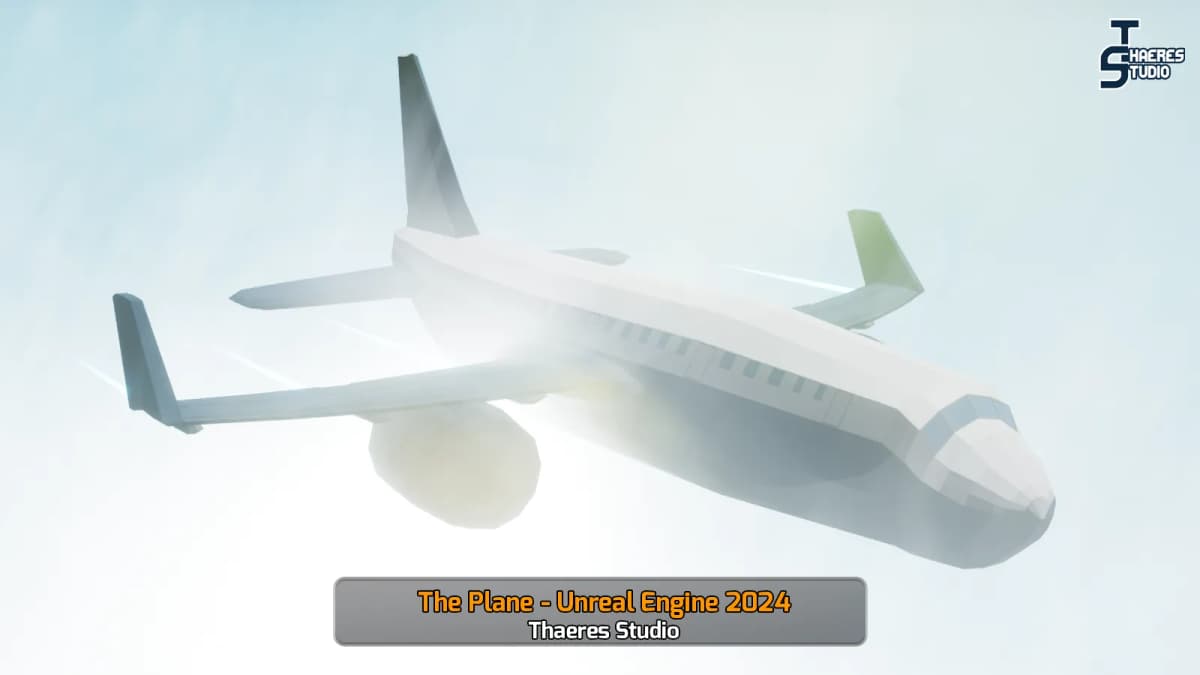
The symbol of my takeoff toward Romania. A plane in my studio's colours, and a challenge: to personify a life transition inside a scene.
The Story
The Plane is the symbol of my takeoff toward Romania. But that departure was far more than a change of country: it was the launch of my very first entrepreneurial attempt. A time-boxed experience, conceived as the chance to truly get my projects off the ground, or at least to try everything to sustain them. It's from that moment on that I could, for the first time, work on my creations full-time.
And what better way to mark that transition, for someone whose craft is game development, than with a model and a scene? At the time, I was making scene after scene without necessarily aiming for complete games. The Plane fits into that movement: an object, an atmosphere, an intention. To personify what Thaeres Studio was at that precise moment, and to make it take off.
Under the Hood
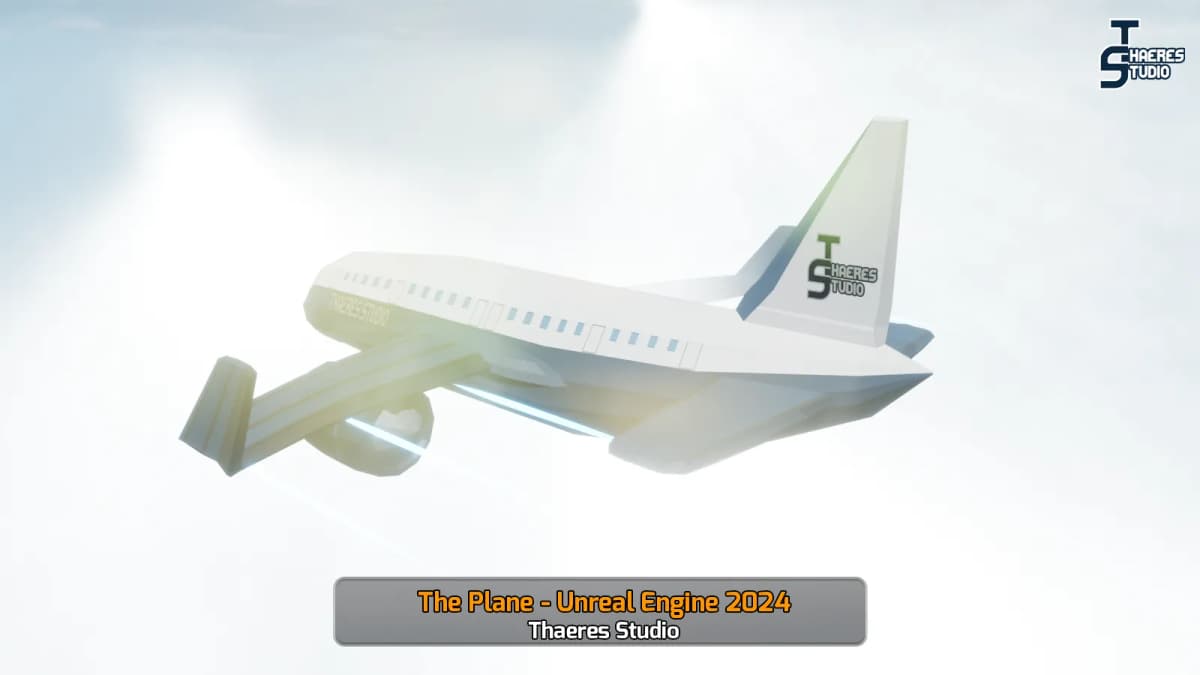
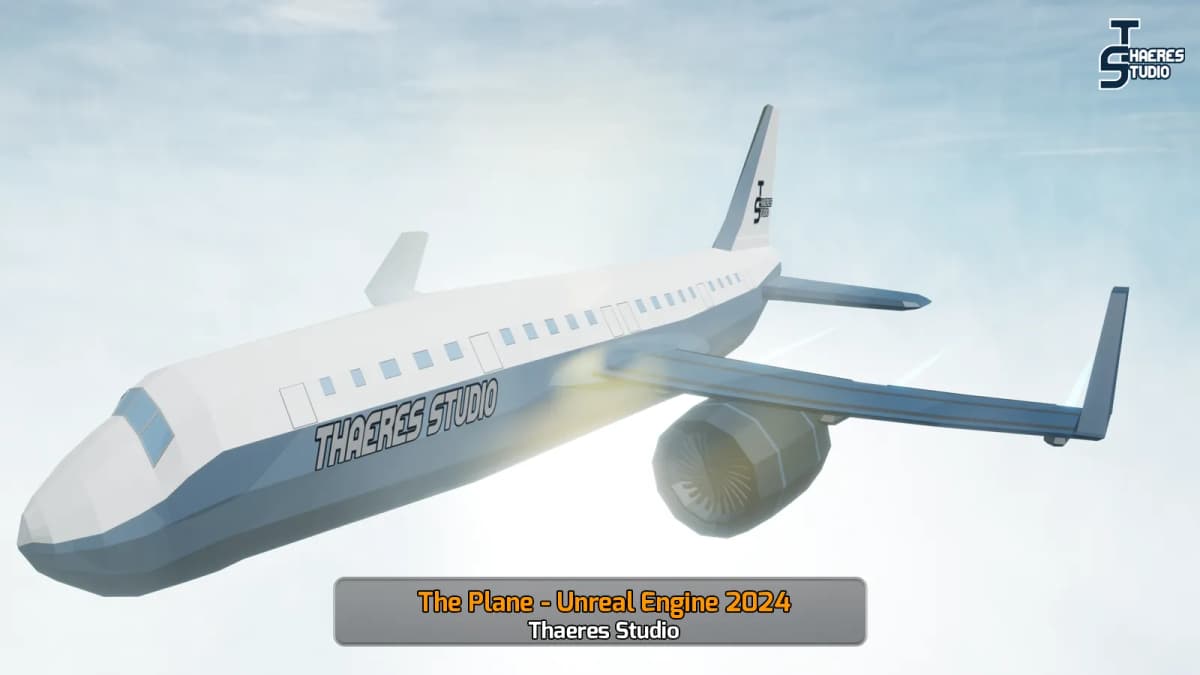
I modelled the plane in Blender, in low poly, after a huge amount of iteration. It's probably one of the models I modelled, deleted, remodelled and adjusted the most. An object far more complex than my usual environments, with a very different technique: this isn't environmental work, it's a vehicle.
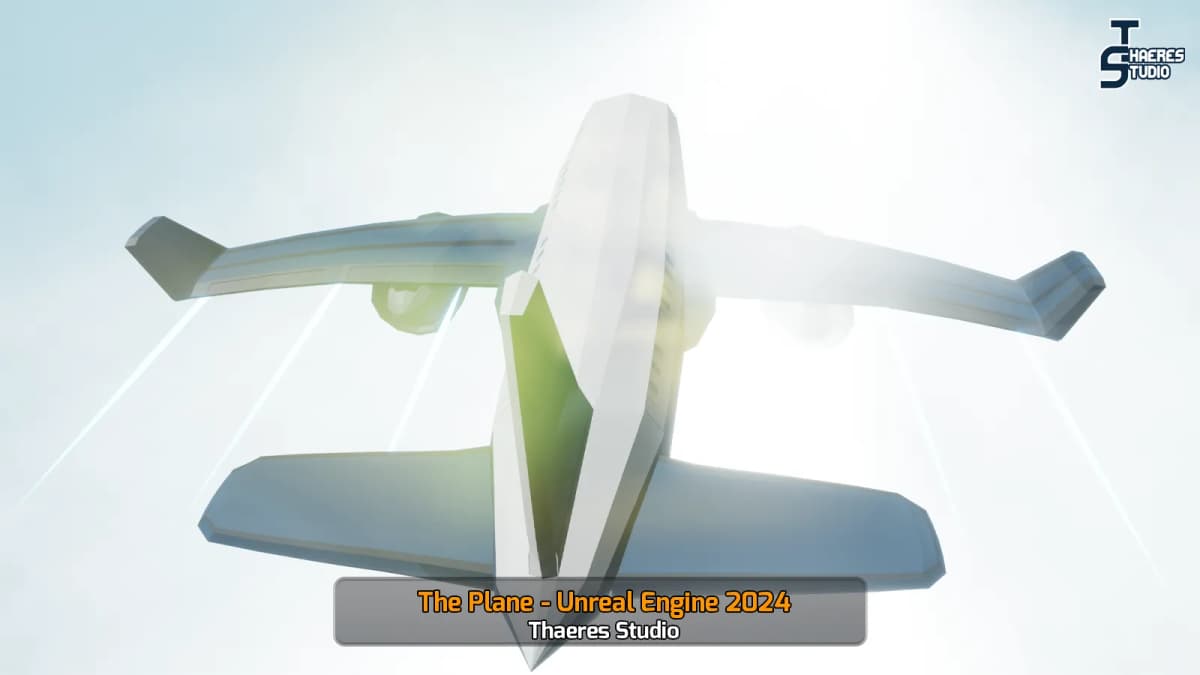
The trick of the scene lies in an inversion of logic. When it's active, the plane is the only element that doesn't move. Everything else is in motion: a day/night cycle, volumetric fog, and a directional smoke drifting through the scene. The effect creates that familiar feeling you get aboard a plane, when you pierce through the clouds.
Blender · Low poly modelling · Custom skybox · Particles & volumetric fog
The Wall
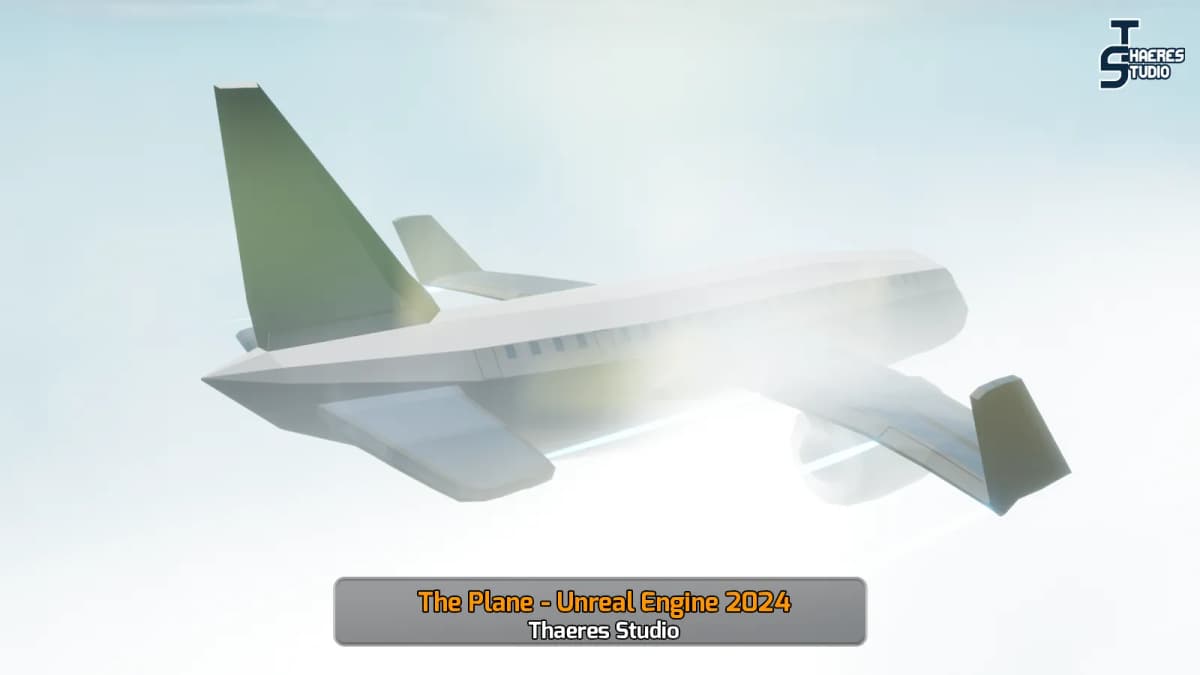
The wall was modelling a vehicle. It's not simple at all, because visual coherence is critical here. Certain elements absolutely have to be present, and above all, proportions become crucial.
In an environment scene, you have freedom: the hourglass in The Hourglass, for instance, is completely oversized compared to the rest, and it works. But a plane, no. The proportions have to be right, otherwise the eye rejects it. I had to start over many times before reaching a satisfying result.
What I'm Proud Of
The final render, honestly. The model is simple, the lettering on the fuselage is far from perfect, but the detail I'm proudest of: I modelled it with no reference image at all. And in the end, you can clearly tell it's a plane. For such a codified object, pulling that off from memory is satisfying.
I also love the lighting, tuned to my usual pastel codes, and that particle effect which, simple as it is, brings the whole scene to life.
What I Learned
The Plane pushed me further on particles, once again. But above all, it taught me an elegant design lesson: to give movement to a scene, the central element doesn't need to move. You can move the entire set around it. Invert the logic.
It's a principle that goes beyond this scene: sometimes the best solution isn't to move the subject, but to move the world.
Today
Like The Hourglass, it's a prototype. A finished scene, with no game or larger intention behind it.
But this one carries a unique personal charge. Even though I've since returned to Belgium, that Romanian period was a deeply transformative part of my life: the moment I dared to bet on my projects full-time. The Plane is its monument. A plane in my studio's colours, frozen at the instant of takeoff.